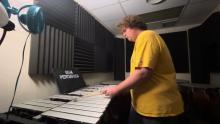
Tune Study - I Hear A Rhapsody Pt. 2 by Behn Gillece -V
Check out the attached PDF!
So here is the second of three chord melodies.
I have the pdf and I have the MalletKat version. You can hear basically what's happening with the sheet music.
I think you can get a lot out of this. You have to know the chords and inversions really well. I think when I just play the lines it makes sense and you here the harmony. That's the goal right. I will post my own version of stella asap.
David is stellar vibraphonist that resides in Paris, France. He's really a special player. He did a few lessons for us!
This lesson talks about a unique way to pedal a bossa and play a solo. It's cool! And short. You will get it right away.
Check out the attached PDF!
In Part 7, we combine two essential approaches to line construction: scale-based motion and chord outlining. These exercises move through ii–V progressions in descending whole steps, blending linear scale passages with clear chord-tone targets to create lines that sound both melodic and harmonically grounded.
Lesson: Inverse Diminished Lines Over the Bridge of Rhythm Changes (Part 2)
In this second part of the lesson, we’re continuing to explore the bridge of rhythm changes with a new twist on the diminished pattern from the previous exercise. In this version, the diminished line is inverted, offering a fresh approach to navigating ii-V lines over the bridge.
In Part 9, we take harmonic implication a step further by incorporating enclosures and chromatic passing tones into our line construction. Applied here to the chord progression of Minority by Gigi Gryce, this exercise demonstrates how carefully placed chromatic notes can add tension, sophistication, and forward motion while still clearly outlining the harmony.
Rhythm Changes Harmonic Vocabulary - Part 4
In this fourth installment of our rhythm changes harmonic vocabulary series, we continue to develop both rhythmic and harmonic fluency over the first A section. While the rhythmic pattern remains consistent with Part 3 in the first four measures, this lesson introduces new voicings and inversions that shift the color and register of the progression.
Check out the attached PDF!
Get to work!
I am making some Tik Tok MalletKat videos for Alternate mode. (The Malletkat is the pro model of electronic keyboard percussion). So I decided to play some tunes and then I thought I'll notate them as an etude for all of you.
Can you play it? I left out the pedal markings? Why? Because they are a pain to notate partly. And partly because you can listen to the pedaling of the track and study that and then at the pedaling yourself. I think it's really important to not have it all handed to you. That's too easy.